GHK-Cu (Copper Tripeptide-1)
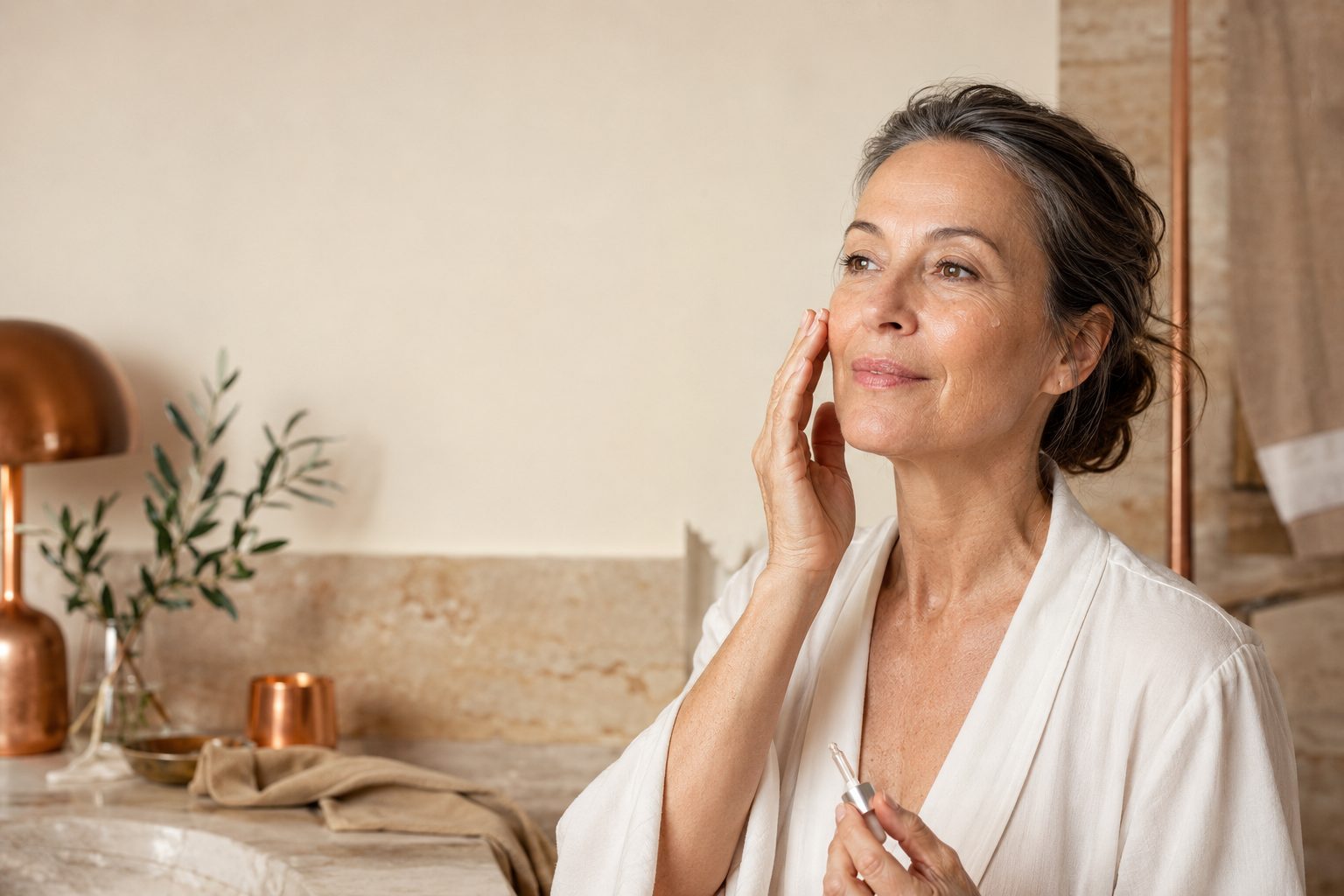
Also referred to as GHK-Cu, Copper tripeptide, Copper tripeptide-1.
Status: Cosmetic or topical context. GHK-Cu appears as an ingredient in cosmetic products in the United States, and its presence in a cosmetic formulation is not FDA review or approval of any medical or aesthetic benefit; the FDA does not pre-approve cosmetic ingredients for effectiveness the way it does drugs. Injectable use of GHK-Cu is an entirely different regulatory and clinical matter from a topical cosmetic product and is not established or approved as a drug use in the United States. Claims seen in cosmetic marketing should not be assumed to reflect the same evidentiary standard as an FDA-approved drug claim.
GHK-Cu is a naturally occurring copper-binding tripeptide most commonly encountered as an ingredient in topical cosmetic products marketed for skin appearance. Its presence in a cosmetic formulation reflects FDA oversight of ingredient safety and labeling, not FDA review of whether the product delivers the cosmetic benefit advertised. Most published research is laboratory-based or comes from small, often industry-funded human studies of specific formulations, so results from one product cannot be assumed to apply to another. Injectable use of GHK-Cu is a materially different and separately regulated matter from topical cosmetic use and is not addressed by cosmetic research.
What it is
GHK-Cu is a tripeptide, glycyl-L-histidyl-L-lysine, bound to a copper ion, that occurs naturally in human plasma and decreases with age. In cosmetics it is synthesized and formulated into serums, creams, and other topical products at concentrations set by the manufacturer rather than by any approved drug standard. It is one of many peptide ingredients used in the cosmetic industry, alongside retinoids and other actives, each regulated as an ingredient rather than as an active drug substance in that context.
Why people ask about it
Patients ask about GHK-Cu after seeing it listed on cosmetic product labels or discussed in skincare marketing that references its natural occurrence in the body and its use in laboratory research. Some conflate a cosmetic-labelled peptide ingredient with a medical treatment because of the scientific-sounding name. Others have heard of injectable GHK-Cu use and want to understand how that differs from a topical serum.
Proposed mechanism
Proposed mechanisms are drawn primarily from cell-culture and animal studies and describe GHK-Cu as a signalling peptide that may influence fibroblast activity, collagen and glycosaminoglycan production, and certain antioxidant and tissue-remodeling pathways in skin. These pathways are proposed based on laboratory work and do not by themselves establish what a topical product delivers to living human skin, since penetration, concentration, formulation stability, and skin barrier factors all affect whether a laboratory mechanism translates into a visible topical outcome. Any effect attributed to a specific commercial formulation depends heavily on that formulation's specific concentration and delivery system, which laboratory studies of the isolated peptide do not directly test.
What researchers have studied
- Cell-culture studies of fibroblast activity and collagen-related gene expression
- Small human studies of specific topical formulations and skin appearance measures
- Laboratory studies of antioxidant and wound-environment signalling
- Formulation and stability research relevant to topical delivery
- Comparative studies of GHK-Cu against other cosmetic actives such as retinoids
- Separate, more limited literature on injectable or systemic GHK-Cu, which addresses different questions than cosmetic use
Human evidence
- Most human studies are small, short in duration, and evaluate a single manufacturer's specific formulation rather than the peptide in isolation.
- A number of published studies have industry funding or authorship ties to cosmetic manufacturers, which should be weighed when interpreting reported benefits.
- Outcome measures in cosmetic studies (skin appearance scores, imaging-based assessments) are inherently subjective or formulation-specific and do not necessarily generalize across products.
- Evidence specific to injectable use is separate, more limited, and not addressed by the cosmetic literature discussed here.
Preclinical evidence
- Cell-culture studies report increased collagen and glycosaminoglycan-related gene activity in fibroblasts exposed to GHK-Cu.
- Laboratory studies describe antioxidant and anti-inflammatory signalling effects in skin cell models.
- Animal wound-healing models report changes in tissue remodeling markers.
- In vitro studies describe effects on markers associated with skin barrier and matrix proteins.
What is not yet known
- Whether laboratory-demonstrated cellular effects translate into a consistent, visible cosmetic benefit across different commercial formulations.
- How penetration and stability vary meaningfully between products, given that this is not standardized like a drug formulation.
- Long-term effects of chronic topical use over years.
- Whether any topical benefit is dose-dependent in a way relevant to consumer products, since concentrations are not standardized by regulation.
- How injectable use, where separately discussed, compares in risk and effect to topical use, which this page does not address.
- The extent to which industry-funded study design may affect reported outcomes.
Regulatory status and access
Topical products containing GHK-Cu are marketed as cosmetics, a category the FDA regulates for safety of ingredients and truthful labeling rather than for proof of the specific benefit claimed. Injectable GHK-Cu is not the same product category as a topical cosmetic, carries different risks, and is not an FDA-approved injectable drug; any interest in that route is a separate conversation from cosmetic skincare and requires direct physician evaluation. Ask about current availability. A physician determines what, if anything, is appropriate only after an individual evaluation.
Known and potential risks
- Cosmetic-industry marketing claims may outpace what has actually been demonstrated for a specific product, since cosmetic claims are not required to meet drug-level proof standards.
- Formulation quality varies widely across brands, and concentration, stability, and delivery are not independently verified the way a drug product would be.
- Topical use can cause local skin irritation or allergic reaction in some individuals, as with many active cosmetic ingredients.
- Confusing injectable GHK-Cu with topical cosmetic use could lead someone to underestimate the very different risk profile of an injectable, unapproved product.
- Unregulated or grey-market injectable GHK-Cu products carry sourcing, purity, and sterility risks that do not apply to a legitimate over-the-counter cosmetic.
Cautions and who may not be a candidate
- Known sensitivity or allergy to copper-containing compounds or to a specific product's other ingredients.
- Broken, actively infected, or recently treated (e.g., post-procedure) skin, where topical actives may need to be paused.
- Pregnancy and breastfeeding, where formulation-specific safety data for topical peptides is generally not established, warranting a direct conversation with a clinician.
- Interest in injectable GHK-Cu, which is a separate and unestablished use that should not be pursued based on cosmetic-product evidence.
- Undiagnosed or worsening skin conditions that need dermatologic evaluation rather than a cosmetic ingredient trial.
Questions to discuss with a physician
- What does it mean that GHK-Cu is a cosmetic ingredient rather than an approved drug?
- How would we know if a specific topical product's claims are backed by real evidence versus marketing?
- Is there any reason my skin type or condition would react differently to a copper peptide product?
- How does injectable GHK-Cu differ in risk and evidence from a topical serum?
- Should this be layered with other actives I already use, such as retinoids?
- What would be a reasonable way to judge whether a product is actually working for me?
Frequently asked questions
Is GHK-Cu FDA-approved?
GHK-Cu is not an FDA-approved drug product. As a cosmetic ingredient, its presence in a product reflects FDA oversight of cosmetic safety and labeling, not FDA review or approval of the specific benefit a product claims.
Does GOAL.MD sell GHK-Cu products?
This page is educational and is not an offer to sell any GHK-Cu product. Ask about current availability, and any recommendation is made by a physician only after individual evaluation.
Does the FDA test whether cosmetic peptides actually work?
No. The FDA regulates cosmetics mainly for ingredient safety and truthful labeling, not for pre-market proof that a specific cosmetic benefit occurs, which is a materially different standard than drug approval.
Is injectable GHK-Cu the same as a GHK-Cu skincare serum?
No. Injectable use is a different route, a different risk profile, and not an FDA-approved drug use in the United States. Evidence about topical cosmetic products does not establish anything about injectable use, and the two should not be conflated.
What has actually been shown about GHK-Cu and skin?
Cell-culture and animal studies describe effects on collagen-related signalling and antioxidant activity, and some small human studies of specific formulations report improved skin appearance measures. Results are formulation-specific and not necessarily transferable between products.
Why do so many skincare studies on peptides seem positive?
A number of published studies in this space have funding or authorship ties to the cosmetic manufacturer whose product was tested, which is worth factoring into how confidently any single study's results should be interpreted.
Can GHK-Cu replace a retinoid or other established skincare active?
This has not been established through direct comparative evidence at the standard expected for a drug claim, and this kind of regimen decision is best discussed with a clinician familiar with your skin history.
Is GHK-Cu safe to use topically?
Many people use copper-peptide cosmetic products without issue, but as with any active ingredient, local irritation or allergic reaction can occur, and patch testing a new product is a reasonable precaution.
Why is GHK-Cu's status different from something like Semax or DSIP?
GHK-Cu is regulated and sold in the United States as a cosmetic ingredient, which is a defined, lawful category with its own labeling rules, whereas Semax and DSIP have no established US regulatory category and exist only as research or compounded materials.
Should I be cautious about strong claims made for GHK-Cu products?
Yes. Because cosmetic claims are not required to meet the same evidentiary bar as drug claims, it is reasonable to ask what specific study, if any, supports a given product's marketing before assuming the claim is well established.
What is GHK-Cu (Copper Tripeptide-1)?
GHK-Cu is a tripeptide, glycyl-L-histidyl-L-lysine, bound to a copper ion, that occurs naturally in human plasma and decreases with age. In cosmetics it is synthesized and formulated into serums, creams, and other topical products at concentrations set by the manufacturer rather than by any approved drug standard. It is one of many peptide ingredients used in the cosmetic industry, alongside retinoids and other actives, each regulated as an ingredient rather than as an active drug substance in that context.
Is GHK-Cu (Copper Tripeptide-1) FDA-approved?
GHK-Cu appears as an ingredient in cosmetic products in the United States, and its presence in a cosmetic formulation is not FDA review or approval of any medical or aesthetic benefit; the FDA does not pre-approve cosmetic ingredients for effectiveness the way it does drugs. Approval status describes regulation, not effectiveness.
Does the legal or regulatory status of GHK-Cu (Copper Tripeptide-1) tell me whether it works?
No. Regulatory status describes what may lawfully be made, prescribed, or sold, and it is a separate question from what the research shows. On this page the regulatory description and the evidence tiers are kept apart so neither is mistaken for the other.
Can a licensed U.S. compounding pharmacy prepare GHK-Cu (Copper Tripeptide-1)?
Topical products containing GHK-Cu are marketed as cosmetics, a category the FDA regulates for safety of ingredients and truthful labeling rather than for proof of the specific benefit claimed. Injectable GHK-Cu is not the same product category as a topical cosmetic, carries different risks, and is not an FDA-approved injectable drug; any interest in that route is a separate conversation from cosmetic skincare and requires direct physician evaluation.
What human evidence exists for GHK-Cu (Copper Tripeptide-1)?
Human research exists but is early, small, or narrow in scope, so conclusions about general use are premature. Most human studies are small, short in duration, and evaluate a single manufacturer's specific formulation rather than the peptide in isolation.
What have animal and laboratory studies of GHK-Cu (Copper Tripeptide-1) reported?
Cell-culture studies report increased collagen and glycosaminoglycan-related gene activity in fibroblasts exposed to GHK-Cu; Laboratory studies describe antioxidant and anti-inflammatory signalling effects in skin cell models; Animal wound-healing models report changes in tissue remodeling markers. These are animal, tissue, or cell-culture findings. They describe a model, not a demonstrated result in people.
Do the animal findings for GHK-Cu (Copper Tripeptide-1) mean it works in people?
No. Findings in animals or in cell culture routinely fail to reproduce in humans, and a positive laboratory model is not evidence of a human benefit. Whether any of this translates to people is exactly what has not been established.
How is GHK-Cu (Copper Tripeptide-1) proposed to work?
Proposed mechanisms are drawn primarily from cell-culture and animal studies and describe GHK-Cu as a signalling peptide that may influence fibroblast activity, collagen and glycosaminoglycan production, and certain antioxidant and tissue-remodeling pathways in skin. These pathways are proposed based on laboratory work and do not by themselves establish what a topical product delivers to living human skin, since penetration, concentration, formulation stability, and skin barrier factors all affect whether a laboratory mechanism translates into a visible topical outcome. This is a proposed pathway rather than a demonstrated effect.
What is GHK-Cu (Copper Tripeptide-1) being studied for?
Published work has focused on Cell-culture studies of fibroblast activity and collagen-related gene expression; Small human studies of specific topical formulations and skin appearance measures; Laboratory studies of antioxidant and wound-environment signalling; Formulation and stability research relevant to topical delivery. A research focus describes where questions are being asked, not where answers have been found.
What is still unknown about GHK-Cu (Copper Tripeptide-1)?
Whether laboratory-demonstrated cellular effects translate into a consistent, visible cosmetic benefit across different commercial formulations; How penetration and stability vary meaningfully between products, given that this is not standardized like a drug formulation; Long-term effects of chronic topical use over years; Whether any topical benefit is dose-dependent in a way relevant to consumer products, since concentrations are not standardized by regulation.
What are the risks of GHK-Cu (Copper Tripeptide-1)?
Cosmetic-industry marketing claims may outpace what has actually been demonstrated for a specific product, since cosmetic claims are not required to meet drug-level proof standards; Formulation quality varies widely across brands, and concentration, stability, and delivery are not independently verified the way a drug product would be; Topical use can cause local skin irritation or allergic reaction in some individuals, as with many active cosmetic ingredients.
Who should not consider GHK-Cu (Copper Tripeptide-1)?
A physician would generally consider it inappropriate in these situations without specialist input: Known sensitivity or allergy to copper-containing compounds or to a specific product's other ingredients; Broken, actively infected, or recently treated (e.g., post-procedure) skin, where topical actives may need to be paused; Pregnancy and breastfeeding, where formulation-specific safety data for topical peptides is generally not established, warranting a direct conversation with a clinician; Interest in injectable GHK-Cu, which is a separate and unestablished use that should not be pursued based on cosmetic-product evidence.
Is GHK-Cu (Copper Tripeptide-1) appropriate during pregnancy or breastfeeding?
No. Pregnancy and breastfeeding are listed as situations where this is not appropriate, because the safety data needed to make that judgement in those populations does not exist.
What would a physician monitor if GHK-Cu (Copper Tripeptide-1) were discussed?
Monitoring concepts include Baseline photography or notes on the specific skin concern before starting a new topical product; Patch testing a new formulation before broader use; Periodic review of overall skincare regimen to avoid unnecessary layering of actives. These are concepts a clinician would apply, not instructions for self-directed use.
Are products sold online as GHK-Cu (Copper Tripeptide-1) verified?
No. Unregulated or grey-market injectable GHK-Cu products carry sourcing, purity, and sterility risks that do not apply to a legitimate over-the-counter cosmetic. Material bought outside a licensed pharmacy has no verified identity, purity, or sterility.
How would a GOAL.MD physician evaluate a question about GHK-Cu (Copper Tripeptide-1)?
A physician starts with the problem you are trying to solve, reviews your history and current medications, and says plainly where the evidence stands. Medical appropriateness is determined only after a full evaluation, and for many substances the honest answer is that the evidence does not support use.
What should I ask a physician about GHK-Cu (Copper Tripeptide-1)?
Useful questions include: What does it mean that GHK-Cu is a cosmetic ingredient rather than an approved drug?; How would we know if a specific topical product's claims are backed by real evidence versus marketing?; Is there any reason my skin type or condition would react differently to a copper peptide product?; How does injectable GHK-Cu differ in risk and evidence from a topical serum?.
Why do people ask about GHK-Cu (Copper Tripeptide-1)?
Patients ask about GHK-Cu after seeing it listed on cosmetic product labels or discussed in skincare marketing that references its natural occurrence in the body and its use in laboratory research. Some conflate a cosmetic-labelled peptide ingredient with a medical treatment because of the scientific-sounding name.
Who reviews what GOAL.MD publishes about GHK-Cu (Copper Tripeptide-1)?
Clinical content is reviewed by a named physician for medical accuracy and by a second physician for regulatory and compliance language before it is published, and a review byline appears only when that review is recorded. New material stays unpublished until both reviews are on record.
This page is educational. Nothing here can be ordered, and nothing here is a prescription or medical advice. Compounded preparations are not FDA-approved. To ask about current availability, visit goal.md/peptides/connect or call or text 314-907-3103.
Medically reviewed by Michael Fitch, MD, MD. Last reviewed 2026-08-13.